

Common Fit Problems You Should Know
Based on my years of fittings professionally

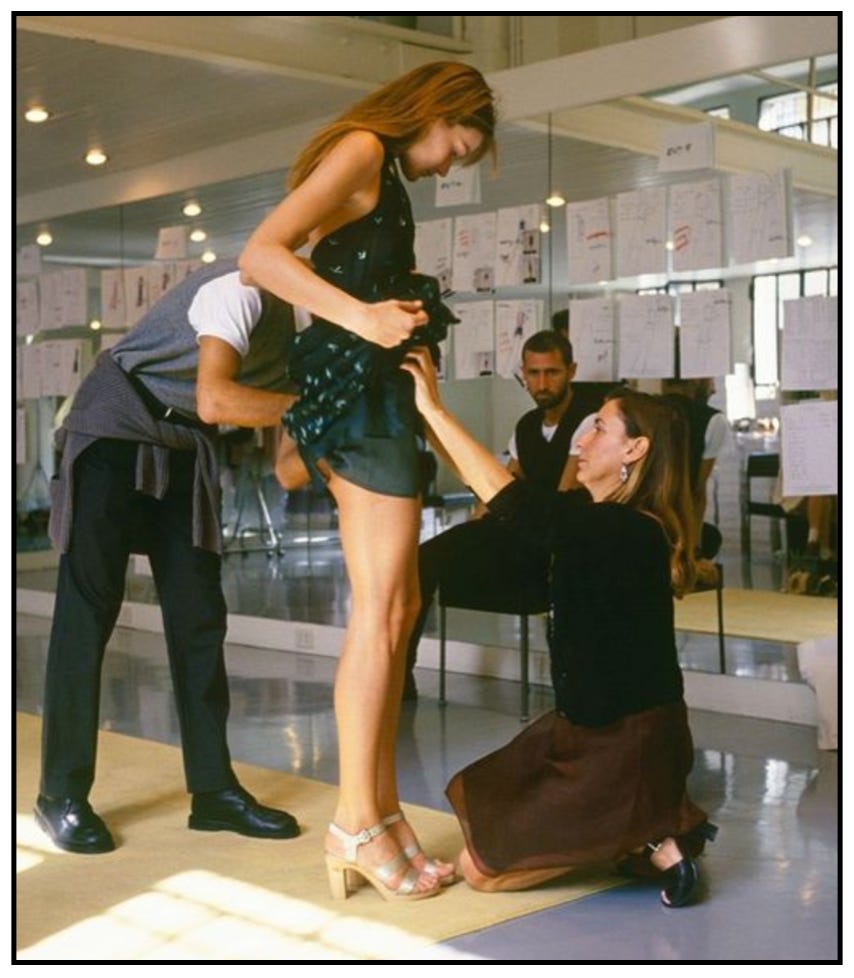
Fit is something I rarely read about, though it is a crucial element in determining what looks good on. We’ve become quite comfortable with oversized clothes, which is fine, particularly in the heat of the summer. My concern is that we’re losing sight of how fantastic it is to wear well-tailored clothes that fit. To allay my concerns, I’ve devised this guide to fit, starting at the beginning. I’ll provide a glimpse of what happens in fittings at a designer house, to what you should look for when trying on clothes.
A huge part of a designer’s job, for a luxury label, is to bring their designs from sketch to sample. The in-between time from idea on paper to finished product involves many fittings on a model. That's when the magic happens; the tweaks that take place during multiple fittings are what make a good design great.
*Please click out of email to read the entire post, I’ve gone over again ;)
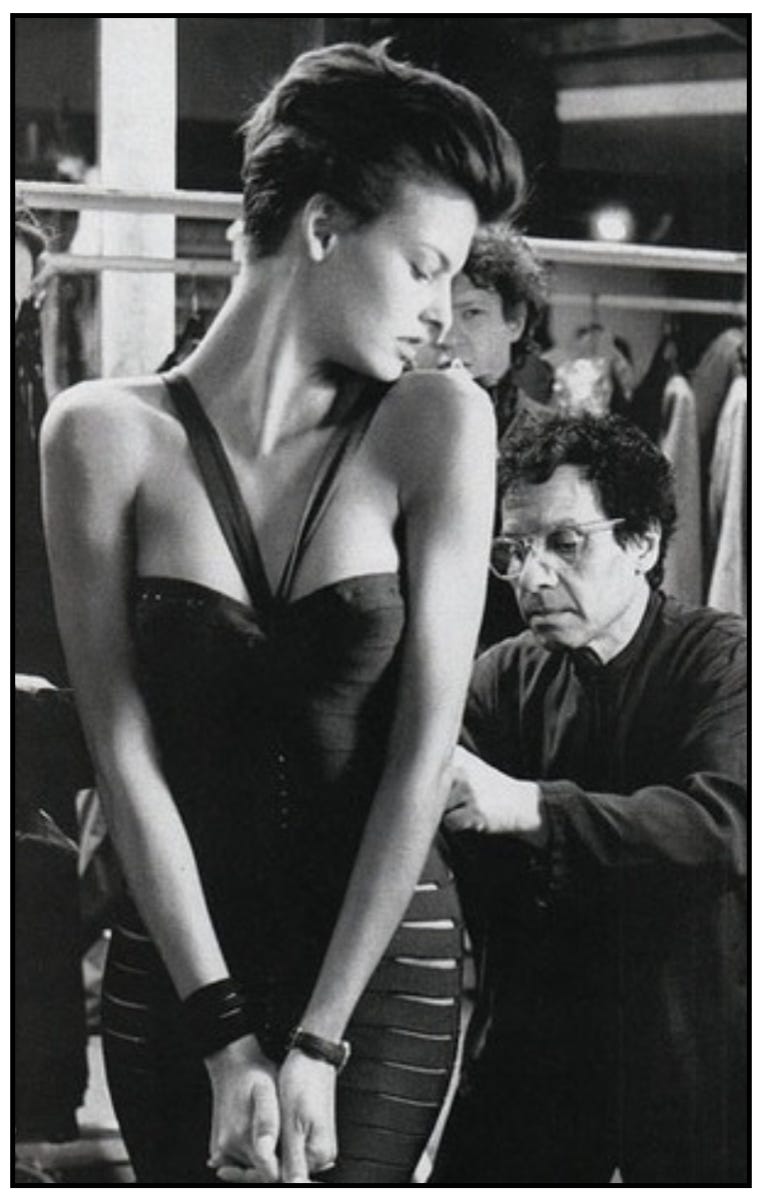
It takes a team of highly skilled people: pattern makers, drapers, cutters, seamstresses, and of course, designers, to see a design to successful fruition. It’s also a lengthy process, often months to fully develop an idea, with multiple fittings over time.
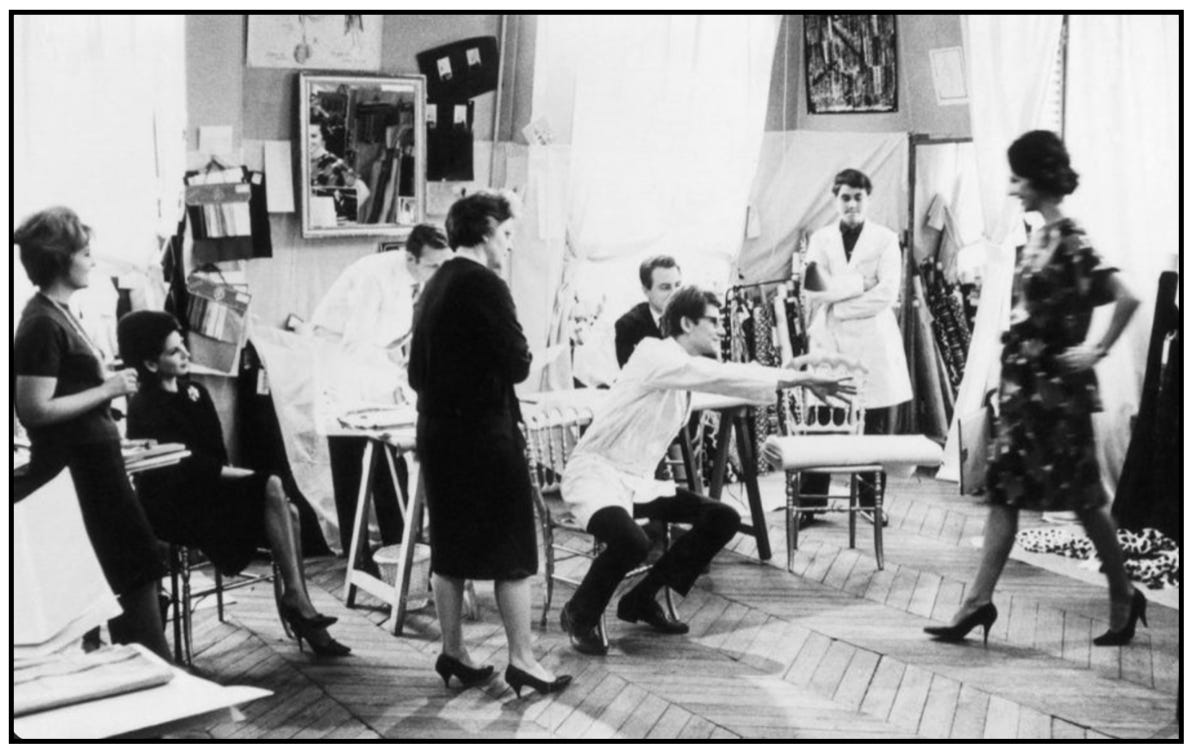
I’ve had the privilege of working for designers with the resources to hire the most talented people, charged with making the first samples that are shown on the runway.
All first samples are fit on the house model, a fit model with runway model measurements, and often is a runway model as well. The house model becomes an integral part of the design team. The best of them know clothes and how to wear them, as opposed to standing lifeless with no insight. I know that sounds harsh, but I’ve worked with both types, and the girls who can articulate how it feels on are worth their weight in gold, and a bonus if they can turn on the attitude for a style they like, it animates what was just inanimate and gives the design team a boost. If the design team likes what they’re seeing it’s joyous. The other side is when it’s not working; solutions must be found. That’s when the seriousness of an operating room sets in. It can be fun or it can be stressful, and it’s a very necessary part of the job.
When a style is produced, the entire fitting process is started from scratch with a new sample based on the runway sample, but re-sized for a production fit model, who is usually a size 8, as opposed to the sample model, who is an elongated size 2.
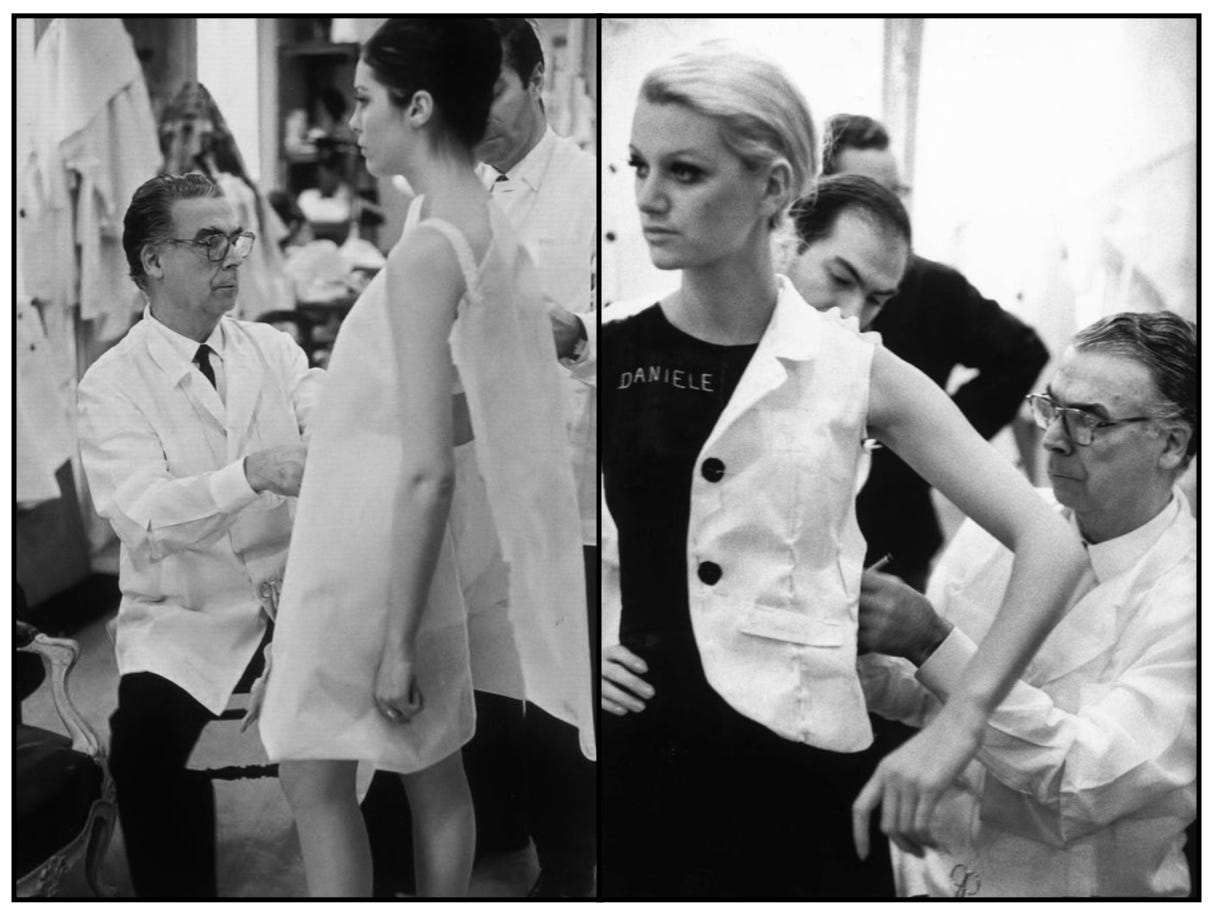
Unfortunately, this artful exchange between model, designer, and technicians is becoming far removed for many brands. It’s extremely expensive to run a large sample room. Companies without their own sample rooms must send tech packs overseas to places like China, where the factory has a sample room. A tech pack consists of very detailed instructions, down to the stitching, with measurements. This often loses a lot in translation. Simple solutions for problems can often be creatively solved when the designer and the draper/pattern maker look at the muslin on a dress form. When making something overseas, small nuances are often lost, and the design takes on a more generic feel. This is one of the most crucial differences between designer clothes and less expensive brands.
How clothing fits is fundamental to how clothes look on the body. Lately, what I see in the stores has very forgiving fits, meaning there is a lot of leeway to fit many body types within the same size range. For example, many of the pants currently at retail are loose, with a wide leg and a flexible waist with elastic or a drawstring. This is a much simpler pattern to make and will fit a wide variety of body types within a size range because of the wide legs and the flexible waist.
There is nothing wrong with this type of pants, I wear them all the time, though it’s worth recognizing this is a simple design and pattern.
For the past several years, oversized or unconstructed jackets have dominated the market. They are much easier to fit due to the extra room built in. However, even easy-fitting jackets are not exempt from precise tailoring to be made properly. The front and back must be balanced so it does not slip to the back when the wearer moves. The neck is another crucial point; if done poorly, it will not sit well on the shoulders and could affect the balance, and most importantly, will not look right on. Collars and lapels are another area where minute measurements make a big difference.
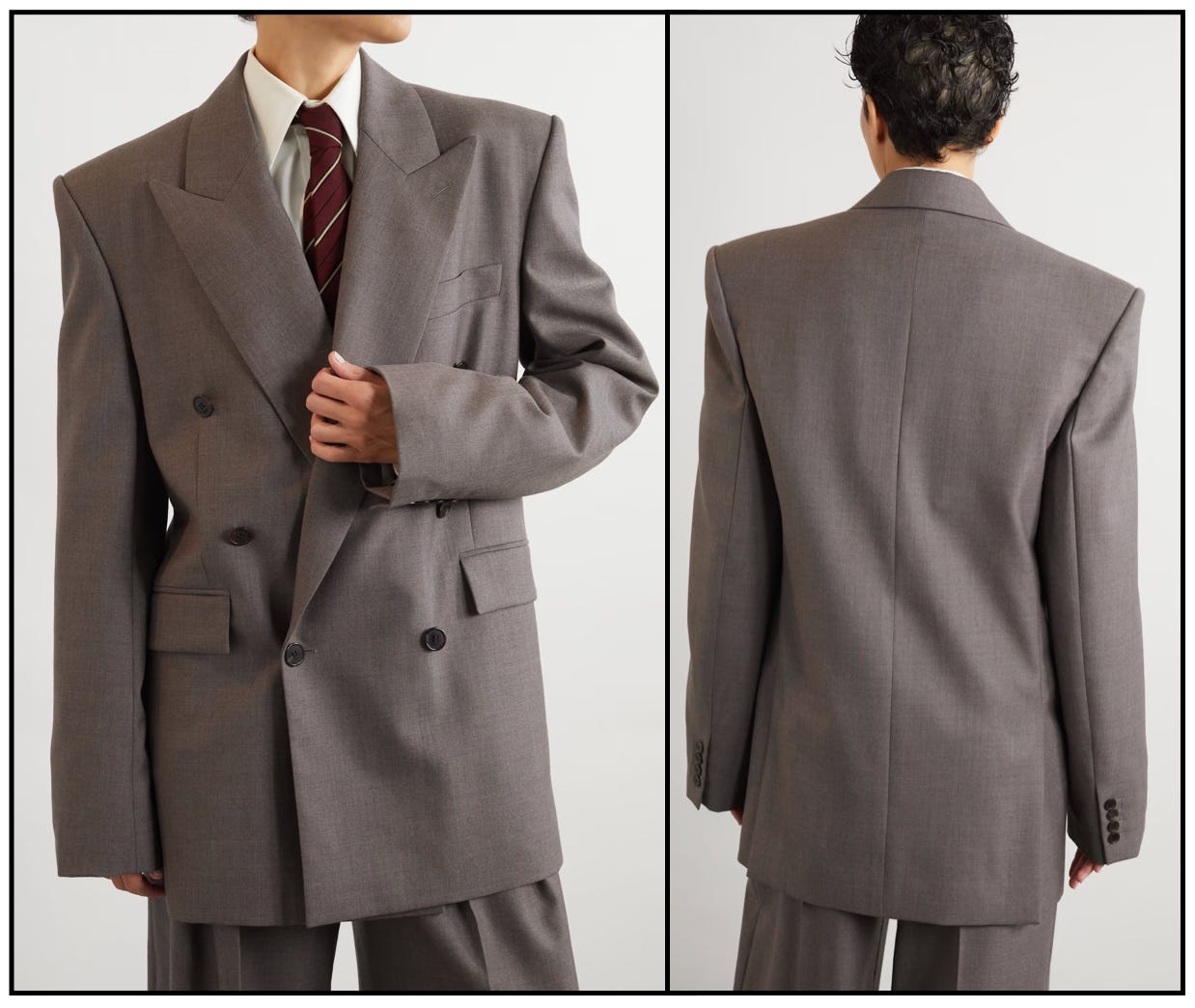
I have a suspicion that many brands are beginning to shy away from more body-conscious tailored clothes. Instead, I see fitted clothes mainly in knits or fabrics with a lot of stretch. The oversized look started as a trend years ago and has stuck around surprisingly long. One reason is that people are used to comfort and are not willing to give it up. But are we being spoon-fed comfortably oversized clothes because they are easier to make and sell? If this is so, fashion is traveling down a very limited path. I’ve been searching for a comfortably tailored, 100% wool, black blazer for years now. This shouldn’t be hard, but it has proven to be elusive. I’ll keep looking.
Let’s not give up on well-tailored clothes in noble fabrics. These are the pieces to invest in and wear for decades. If this rings true to you, read on for my list of what to look for when it’s just you, the mirror, and the garment auditioning for a space in your wardrobe.
Tailored Jackets
When scrutinizing the fit of a jacket, have it buttoned.
Look at the proportion on you. Bear in mind, most production fit models are around 5’8”. Does the jacket look too long or short? If it’s too long and is to be worn with pants, it will make your legs look short. And no one wants that!
Is it buckling at the center back? This often happens if it is too narrow through the high hip, forcing the jacket to ride up to the place where it does fit and causing the buckling at the small of the center back. It can also result from a jacket that is too long, causing the narrowest part of the waist to sit on the high hip. These are fit problems I see often. The lesson here is to always look at your back. If there is no mirror for the back view in the dressing room, use your compact mirror to see your back. This has saved me from a lot of mistake purchases.
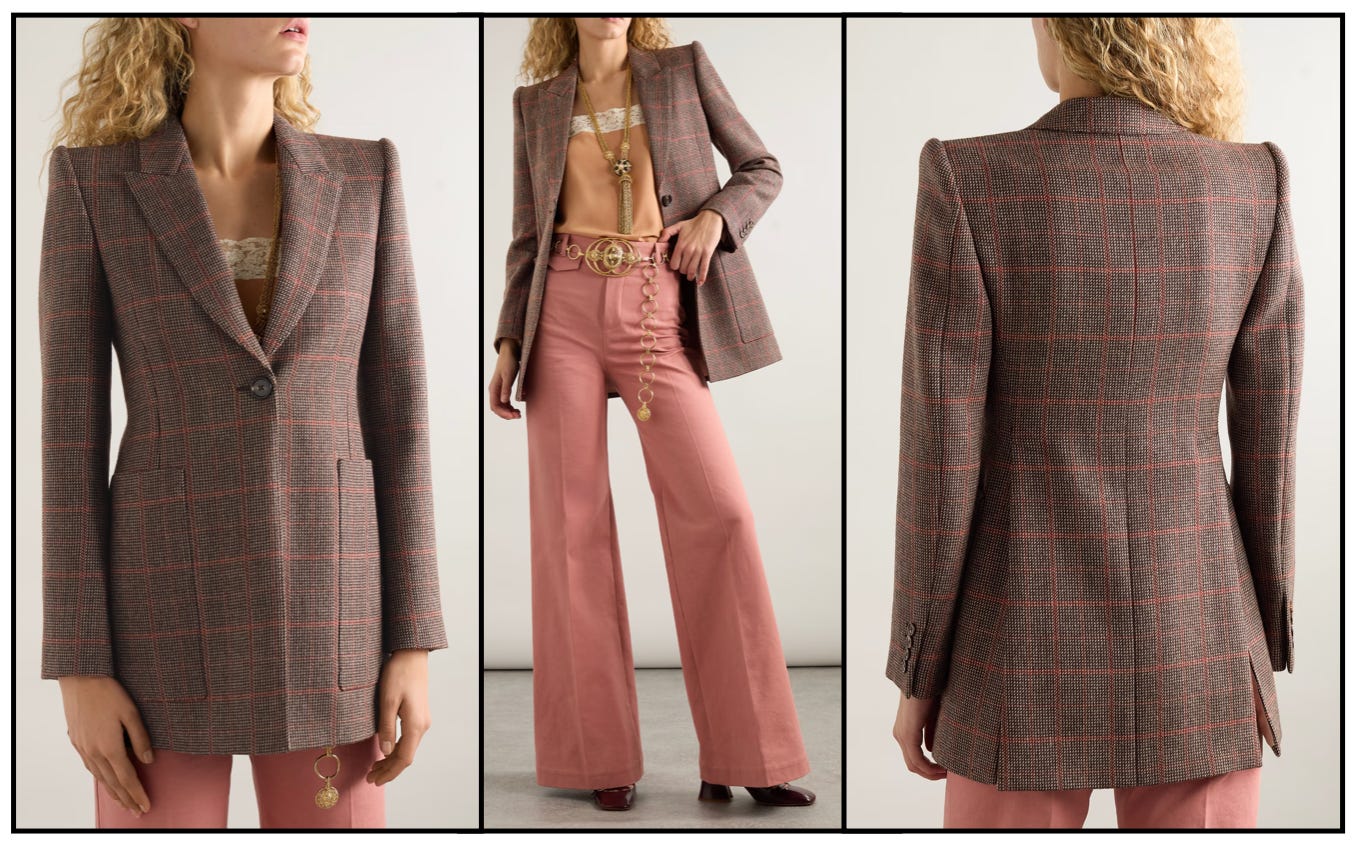
If the jacket has a defined waist, is it aligned with your waist? See above, but even if it isn’t visibly buckling, the proportion will be off, and the jacket won’t be doing you any favors.
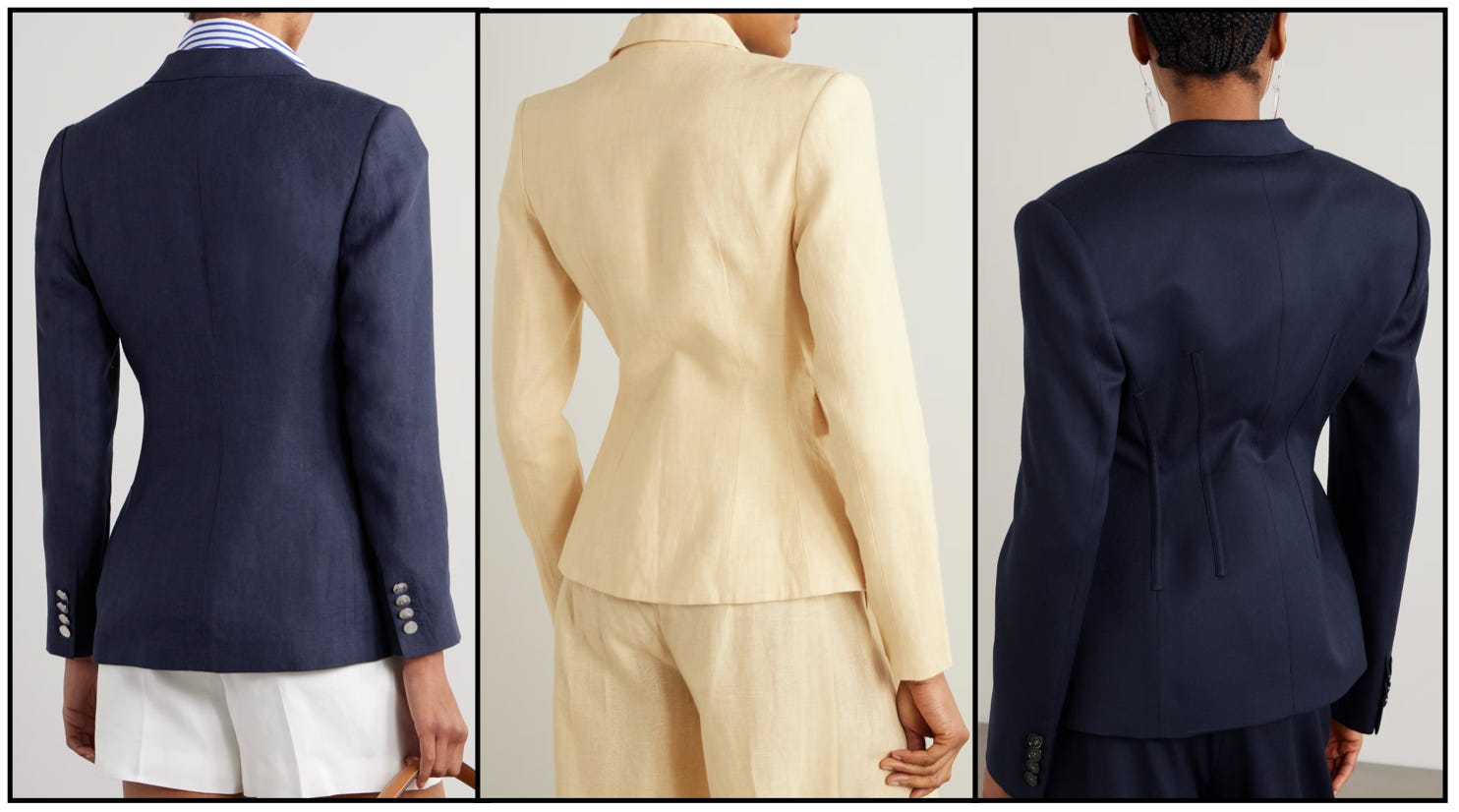
How do the shoulders fit? Even a jacket with exaggerated shoulders should fit firmly on your shoulders, not flopping to the back or front, which most likely indicates a front and back that are not balanced. This cannot be fixed.
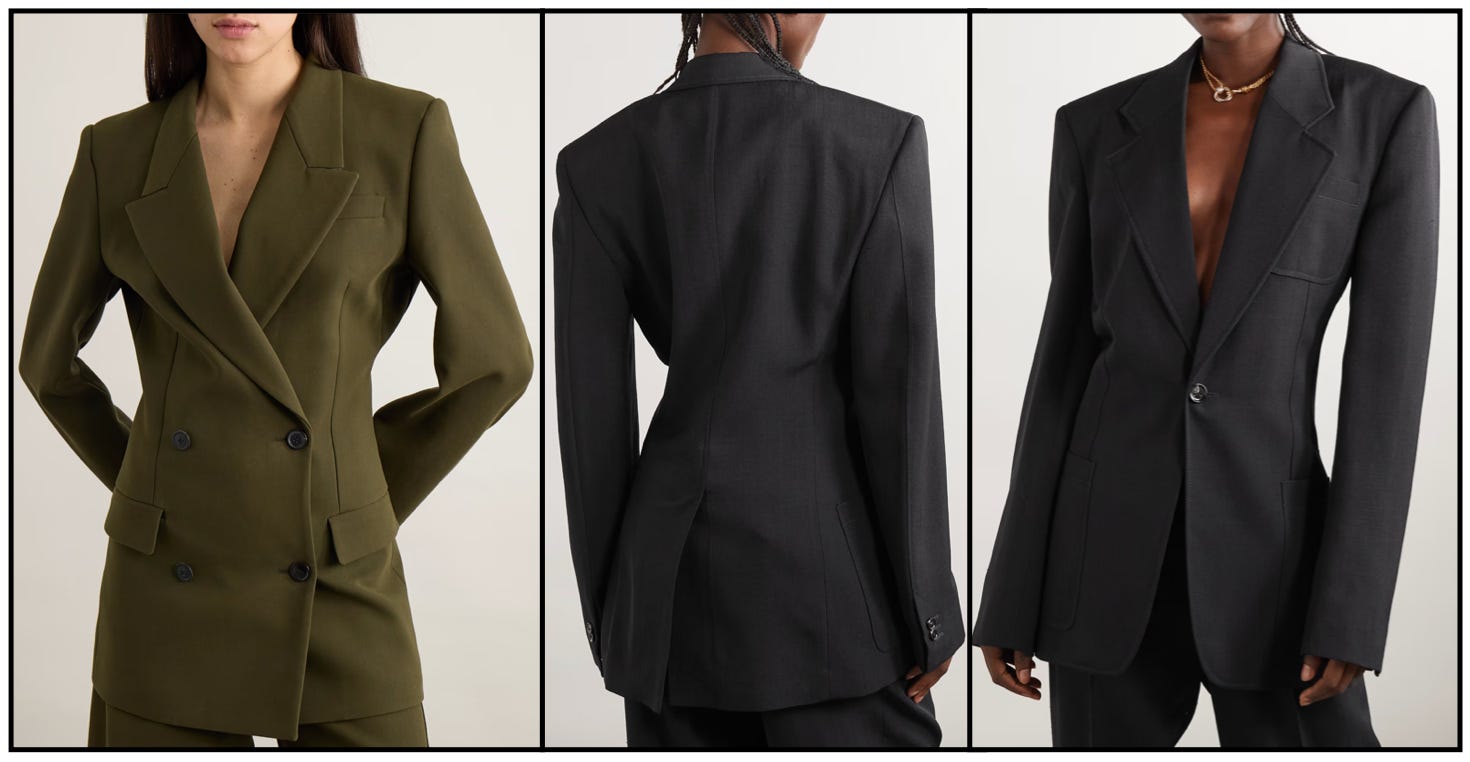
Are the shoulders too small? There are jackets with small shoulders, but if your shoulders are visible through the top of the sleeve cap, they are too small. Try sizing up.
Scrutinize the neck, collar, and lapels. Do you like the width of the collar and lapels? Does the neck width suit your body? You don’t want it too far from the neck or too close. It should sit close, not pressing on your neck.
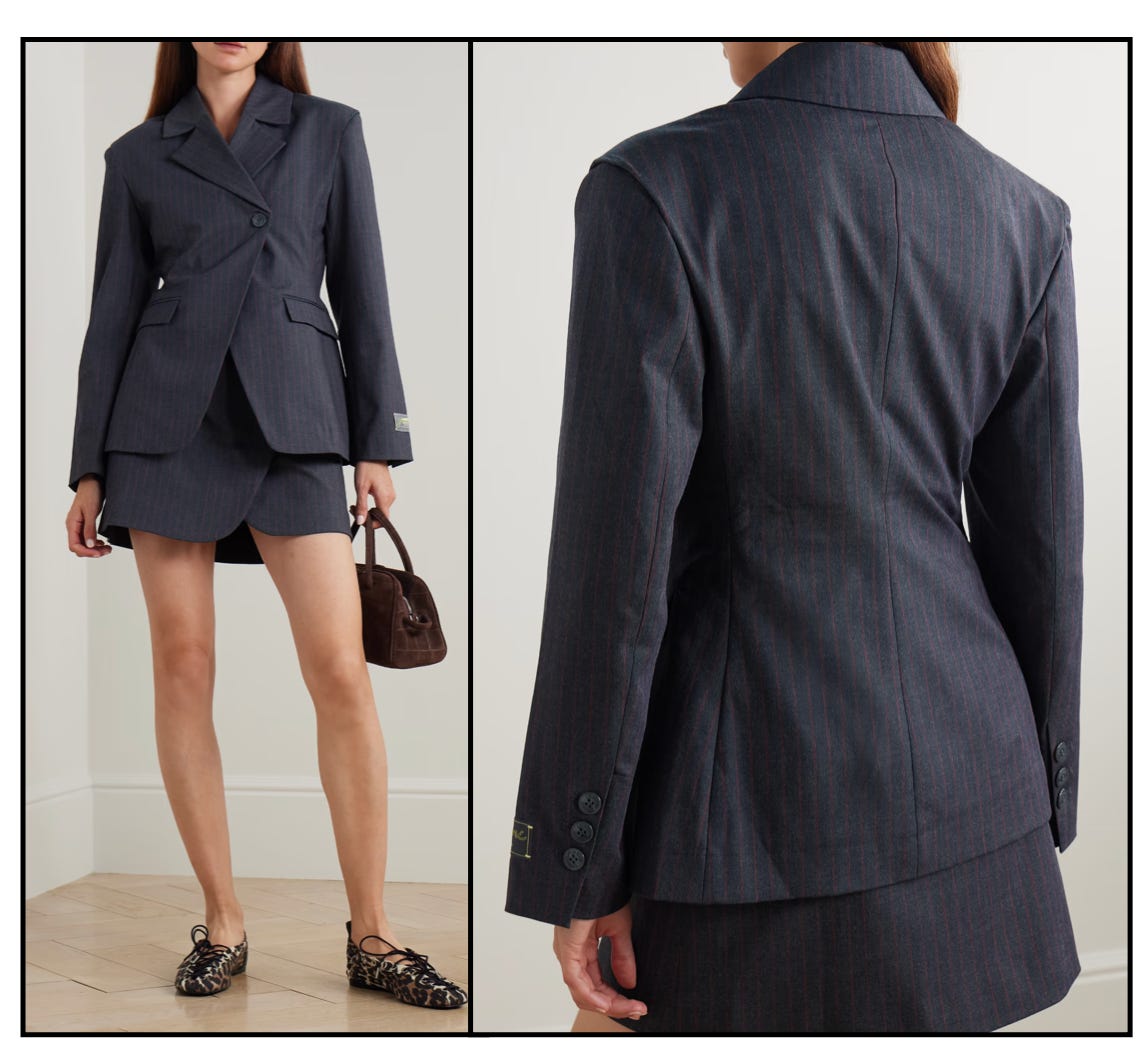
Move your arms around. Do you feel too constricted? Does the back across the shoulder blades feel too tight when you reach forward? Does the armhole feel too high so you’re aware of it? Also, bear in mind what you will be wearing under the jacket. Can the armhole comfortably accommodate it?
Can the sleeves accommodate whatever you want to wear under the jacket?
Do the sleeves appear too tight? This most commonly happens at the biceps.
How is the sleeve length? Too long can be altered, but too short is not so easy. If they are too long, see if there are buttons at the sleeve cuff with working buttonholes, and confirm if they interfere with shortening.
Tailored Pants
Pants are notoriously hard to fit. People’s booties come in all shapes and sizes. Therein lies the fit problem, though even on a fit model, getting pants to fit correctly is difficult. Here are the key areas to look at. The biggest problem area by far is the front and back crotch, or in pattern-making terms, the rise.
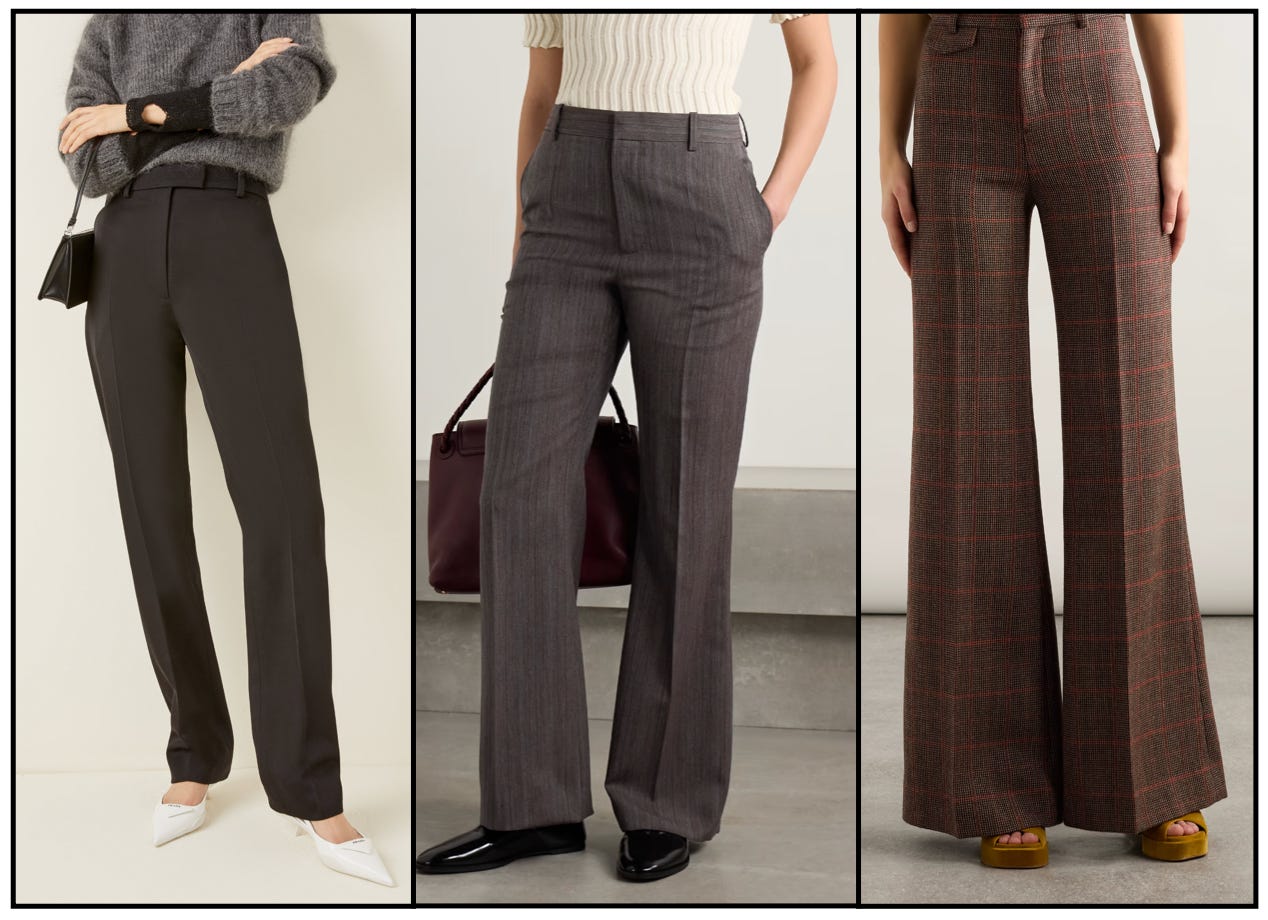
At the front crotch, are there smiles? This is a pattern problem and can’t be fixed.
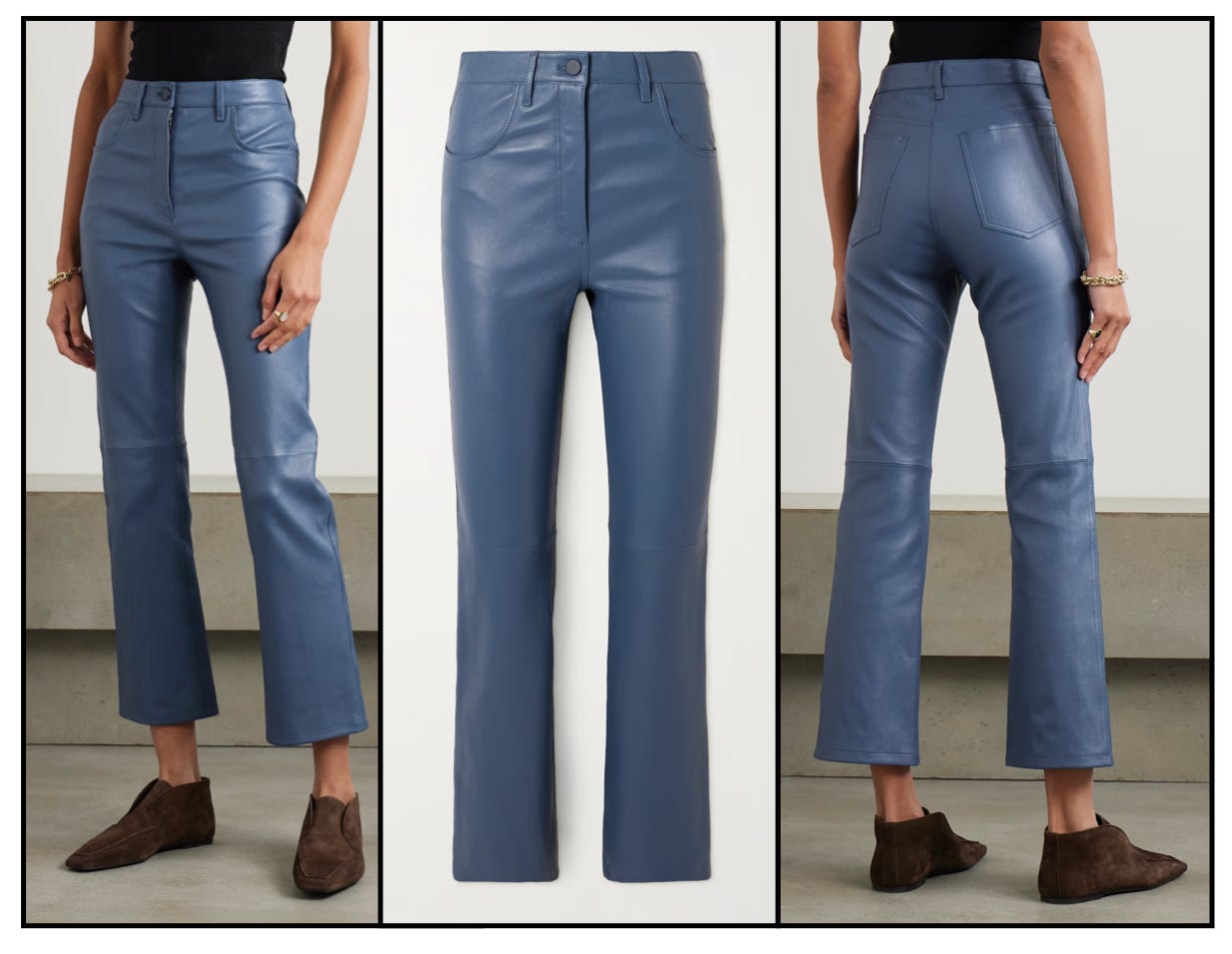
Are the pants too tight across the hip in the front or back?
Is the rise too low, causing distortions around the crotch?
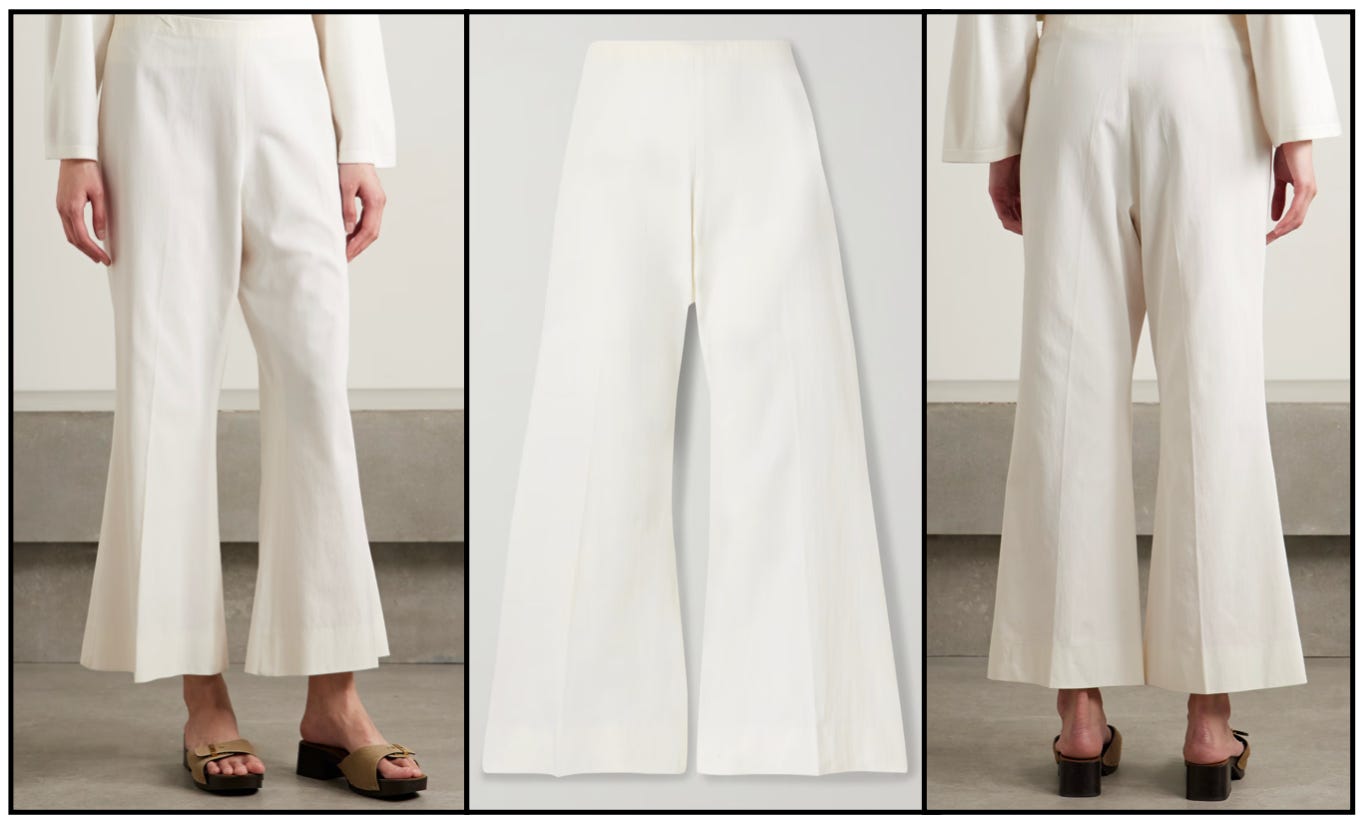
Is the rise too high? If you can feel it, trust me, you’ll never want to wear them.
Are the legs too tight in the thighs?
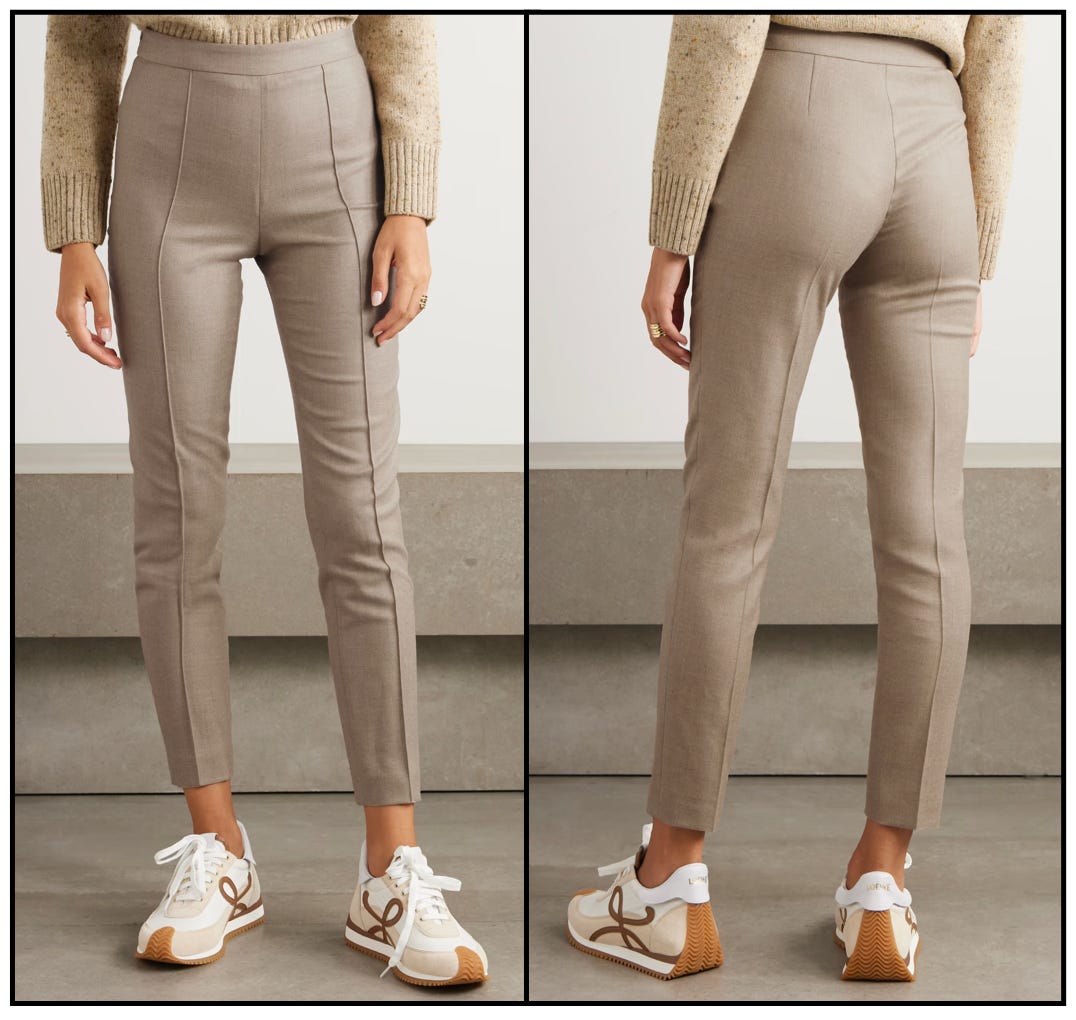
Are the legs too tight in the shins? To test it, sit down, then stand, if the legs get caught on your shins and you have to pull them down, they are too tight. Pants with stretch that are tight work better because they can stretch when you sit and relax when you stand again.
Is the waist too tight? If it feels uncomfortably tight, don’t buy them. You won’t want to wear them.
If the waist is too large with a gap at the center back, you can have it altered at the center back seam.
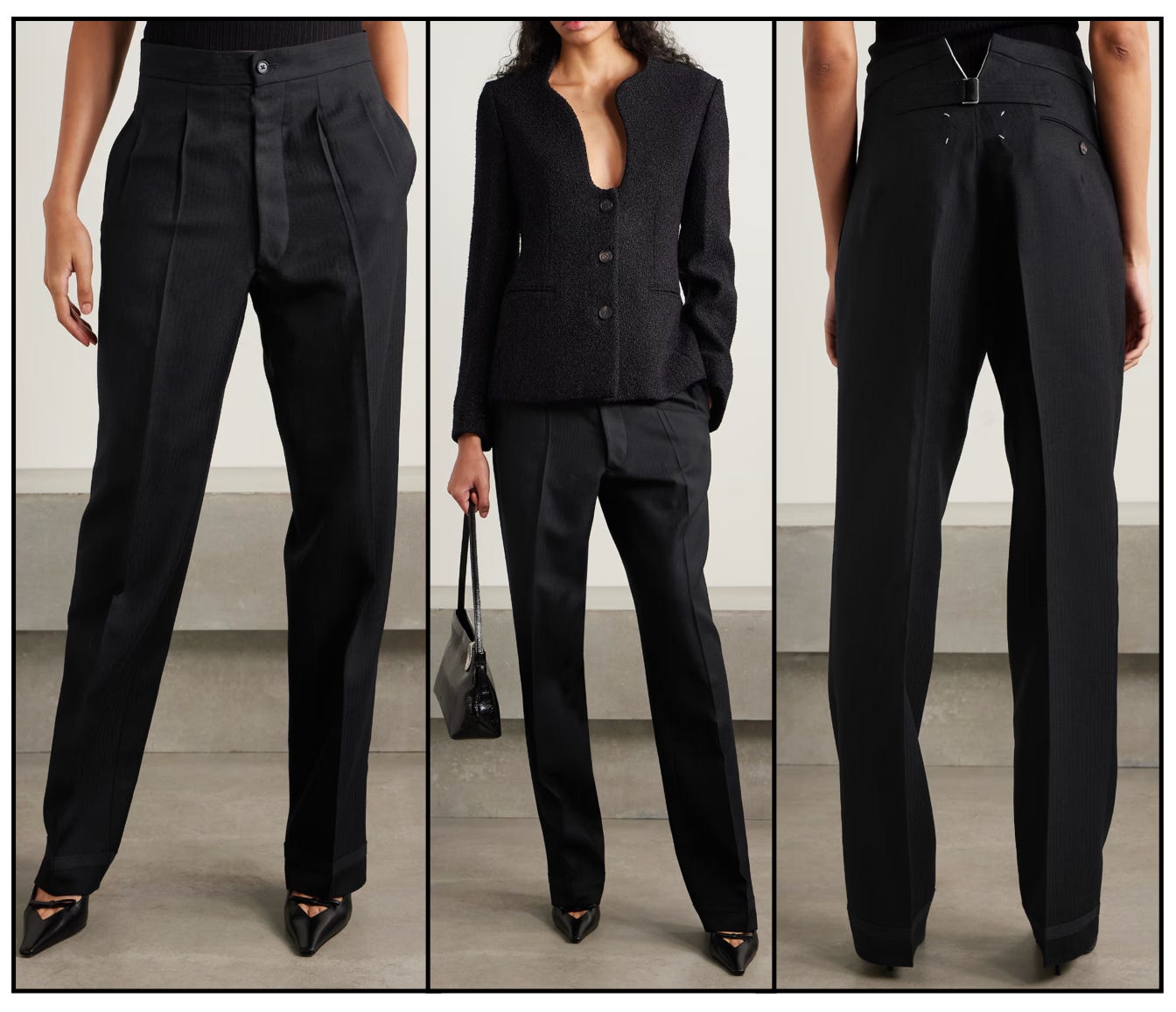
Look at the pictures. This will illustrate better than my words the common problems to look for.
Let me know if you like posts like this. I know it’s a departure from my usual posts where inspiration is my main motive.
It dawned on me that the knowledge I’ve accrued over the years as a designer could be helpful to you. I have a lot of information of this nature up my sleeve. Let me know if you would like more of this. And last, thank you soooooooo much for taking the survey last week! You provide me with valuable information that helps me plan stories you want to see. I’m always looking for ways to improve your experience here. Your continued support as paid subscribers means the world to me! Please keep the comments coming and let me know what’s on your mind!
xxx Jolain


Thank you, so much. In a perfect world, the shop attendant would help with honest fitting but of course, there is a motivation for commission, etc. Getting honest feedback as to whether or not a piece of clothing works is hard enough, let alone finding someone who knows how to pinpoint exactly what isn’t working. Just subscribed to your page after finding your article via google on Romy Schneider’s style— who, by the way, always had the tailoring on point—loving it already. 🙌🏻
This is exactly why I just had to have 5 pairs of pants made by Patricia Voto. Between poor fit and quality, finding anything ready to wear or off the rack is becoming increasingly difficult.